A car may look perfect in photographs and appear impressive on a specification sheet, but the test drive is where you discover whether it genuinely fits your daily life.
This is especially important in Dubai. Your vehicle may need to handle busy city traffic, fast highway sections, multi-storey car parks, speed humps, strong sunlight, long commutes, and high demand on the air-conditioning system. A useful test drive should therefore involve more than driving around the dealership for a few minutes.
You need enough time to evaluate how the vehicle feels, how easily you can operate its features, and whether it remains comfortable in the situations you regularly experience.
Here is what to check during a test drive in Dubai before making your final decision.
Prepare Before the Test Drive
Before arriving at the showroom, think about how you will actually use the vehicle.
Will it mainly be used for commuting in Dubai? Do you regularly travel between emirates? Will you carry children, passengers, sports equipment, luggage, or work supplies? Are you looking for a comfortable family SUV, an adventure-ready vehicle, or something that is easy to manage in crowded areas?
Having a clear idea of your normal routine will help you focus on the features that matter most.
It is also useful to:
- Bring your valid driving licence
- Wear the shoes you normally drive in
- Bring family members who will regularly use the vehicle
- Prepare questions about features, ownership and servicing
- Check that the model and trim you test are similar to the one you intend to buy
Whenever possible, ask the sales representative what type of route the test drive will cover. A good route should allow you to experience low-speed driving, normal acceleration, braking, turning and parking.
Dubai’s RTA advises drivers to plan their routes, maintain safe distances, avoid distractions and adjust their driving to changing road and visibility conditions. The same safety principles should apply throughout a test drive.
1. Check the Driving Position
Before moving, take time to adjust the seat, steering wheel and mirrors properly.
Do not accept a poor seating position simply because you are unfamiliar with the adjustment controls. Try moving the seat forward, backward, higher and lower until you find a natural position.
Ask yourself:
- Can I reach the steering wheel without stretching?
- Are the pedals comfortable to operate?
- Can I clearly see the instrument display?
- Does the seat support my lower back?
- Is there enough space around my knees and shoulders?
- Can I remain comfortable during a longer commute?
The driving position should feel relaxed rather than forced. A seat that feels slightly uncomfortable during a short test drive may become much more noticeable during a daily journey across Dubai.
Also check how easy it is to enter and exit the vehicle. This is particularly important with taller SUVs, especially for children, older passengers or anyone with limited mobility.
2. Test the Air Conditioning Properly
Air-conditioning performance is one of the most important things to check when choosing a vehicle in the UAE.
Start by checking how quickly the cabin begins to cool. Try different fan speeds, temperature settings and air vents. Make sure the controls are easy to find and adjust without taking too much attention away from the road.
Check whether the air reaches the rear seats effectively. If the vehicle has rear air vents or separate climate controls, sit in the back and test them.
You should also examine:
- The strength of the airflow
- How quickly the cabin temperature changes
- Whether the fan becomes excessively loud
- The position of the front and rear vents
- Whether physical controls are available for frequently used functions
- How easily the system can be adjusted through the touchscreen
A powerful climate system is useful, but good control placement also matters. You should not need to search through several menus every time you want to change the temperature.
3. Evaluate Visibility in Every Direction
Good visibility can make a major difference when driving through busy junctions, changing lanes or entering a tight parking space.
From the driver’s seat, check the view through the windscreen and side windows. Pay attention to the thickness of the front pillars, the size of the mirrors and the visibility through the rear window.
Look for any large blind spots around the vehicle.
During the drive, notice how confident you feel when:
- Joining another road
- Changing lanes
- Turning at a junction
- Reversing
- Parking beside another vehicle
- Approaching pedestrians or cyclists
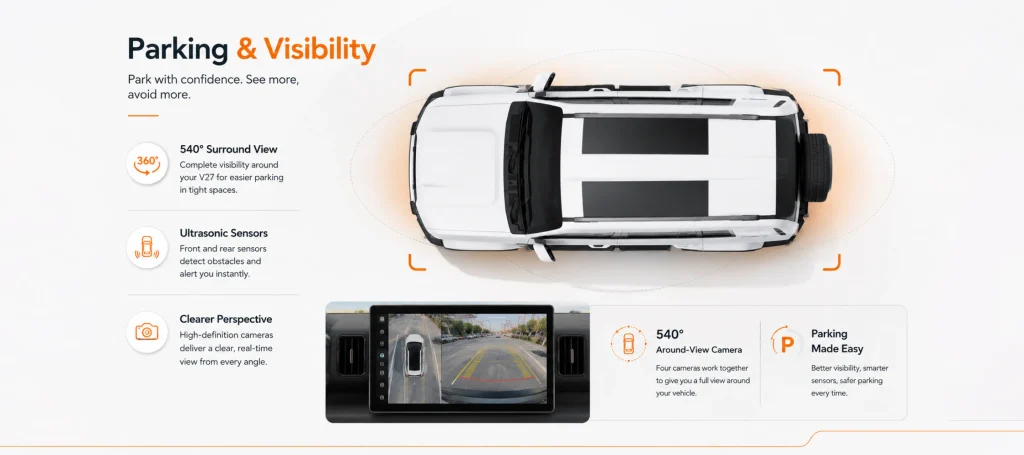
If the vehicle includes blind-spot monitoring, a surround-view camera or parking sensors, test how clearly those systems communicate with you. Driver-assistance features should support your awareness, not replace careful observation.
4. Check Low-Speed Driving in Traffic
A large part of everyday driving in Dubai may involve low-speed traffic, busy service roads, queues near shopping centres and frequent stopping.
During the test drive, observe how smoothly the vehicle moves away from a complete stop. The accelerator should be easy to control without making the car feel too sudden or hesitant.
Pay attention to:
- Initial accelerator response
- Smoothness when moving through slow traffic
- Ease of maintaining a low speed
- Brake sensitivity
- Steering effort
- General visibility around nearby vehicles
For an electrified vehicle, including a REEV SUV, the initial response may feel different from that of a conventional petrol vehicle. Electric motors can deliver power quickly, so check whether the response feels smooth and predictable enough for your driving style.
5. Test Acceleration and Highway Confidence
Dubai’s road network includes wide, multi-lane roads where confident acceleration can be useful when joining traffic or changing lanes.
You do not need to drive aggressively to evaluate performance. Under safe conditions and with guidance from the representative, check whether the vehicle builds speed smoothly and confidently.
Consider:
- Is there a delay when you press the accelerator?
- Does the power arrive smoothly?
- Does the vehicle remain stable as speed increases?
- Can you join a faster road without feeling stressed?
- Does the engine or powertrain become excessively noisy?
For a REEV, also ask whether the test vehicle has enough battery charge to demonstrate its electric-first driving behaviour. If the range extender begins operating during the drive, pay attention to whether the transition is smooth and whether there is a noticeable change in sound or vibration.
6. Pay Attention to the Brakes
Braking is not only about stopping distance. It is also about how confidently and smoothly you can control the vehicle.
Try normal braking at different speeds while remaining within road rules and surrounding traffic conditions. The brake pedal should feel predictable rather than overly sensitive, vague or difficult to judge.
Check whether the vehicle remains stable and whether you can stop smoothly without causing passengers to move forward suddenly.
Electrified vehicles may use regenerative braking to recover energy. Different systems can feel noticeably different, especially when you lift your foot from the accelerator.
Ask whether the regenerative braking level can be adjusted. Try the available settings and decide whether the vehicle’s deceleration feels natural to you.
7. Check Steering and Turning
A vehicle can appear large from the outside but still feel manageable from behind the wheel. The test drive should help you understand how easily it changes direction.
Try normal turns, roundabouts and parking manoeuvres. Notice whether the steering feels too light, too heavy or suitably balanced.
Check the turning circle by performing a U-turn where it is safe and legal. This can give you a better idea of how the vehicle will behave in residential areas, car parks and narrow access roads.
A practical Dubai SUV should feel stable at higher speeds while remaining manageable in tighter spaces.
8. Notice the Ride Over Uneven Surfaces
Dubai has many smooth roads, but your daily route may also include speed humps, ramps, expansion joints, construction areas and uneven parking entrances.
Notice how the suspension handles these surfaces.
Does the vehicle absorb bumps comfortably, or does every impact enter the cabin? Does the body continue moving after passing over a speed hump? Do rear-seat passengers experience more movement than the driver?
A firm suspension can improve control, while a softer setup may prioritise comfort. Neither is automatically better. The important question is whether the balance suits your needs.
If possible, sit in the rear seat while another authorised driver operates the vehicle. Ride quality can feel quite different in the second row.
9. Listen for Cabin Noise
Turn down the audio system for part of the test drive.
Listen to the cabin at low and moderate speeds. Pay attention to road noise, tyre noise, wind noise and sounds from the powertrain.
Also check whether there are any rattles coming from the dashboard, doors, centre console or rear cargo area.
A test vehicle may have been driven frequently by many customers, so a small sound does not always mean every vehicle will have the same issue. However, unusual noises should still be discussed with the sales representative.
For a REEV, notice the difference between electric driving and operation with the range extender active. The transition should not make the vehicle feel unexpectedly rough or disruptive.
10. Test the Parking Technology
Parking is one of the most important parts of a Dubai test drive.
Try parking the vehicle rather than simply asking the representative to demonstrate the cameras. This is the best way to understand whether the technology is genuinely useful.
Check:
- Camera image quality
- Visibility in bright sunlight
- Front and rear parking sensors
- Surround-view camera coverage
- Position of the guidance lines
- Speed and accuracy of the display
- Ease of switching between camera views
- Visibility around the wheels and bumpers
Make sure the alerts are clear without becoming distracting. The camera should help you judge the available space, but you should still be able to understand the vehicle’s dimensions without relying completely on the screen.
If you regularly use underground or multi-storey parking, consider the vehicle’s width, height and turning circle as well as its camera system.
11. Try the Infotainment and Main Controls
A modern vehicle may contain many digital features, but those features should be easy to use.
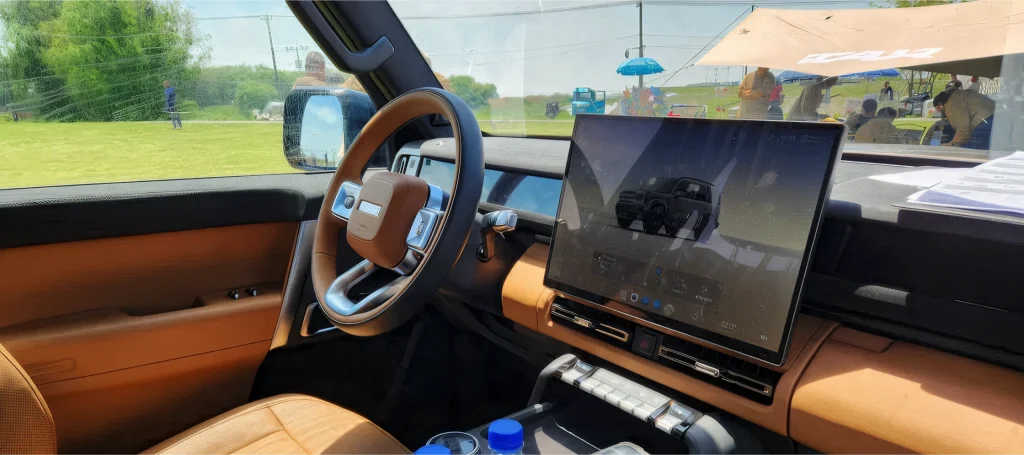
Connect your phone if the dealership permits it. Check how quickly the system responds and whether the screen remains readable in bright conditions.
Try the functions you are likely to use every day:
- Navigation
- Bluetooth
- Smartphone integration
- Audio controls
- Climate settings
- Camera activation
- Voice control
- Drive-mode selection
- Steering-wheel controls
Do not focus only on screen size. Menu structure, responsiveness and ease of use are more important during everyday ownership.
Also check whether commonly used functions can be controlled through physical buttons or the steering wheel. A system that looks impressive in the showroom may become frustrating if simple tasks require too many steps.
12. Check Passenger and Storage Space
After driving, spend time in every seating position.
Sit behind the driver’s seat while it remains adjusted to your preferred driving position. This will give you a more realistic understanding of rear legroom.
Check:
- Rear headroom and legroom
- Ease of entering the second row
- Comfort of the middle rear seat
- Rear air vents
- USB or charging connections
- Child-seat mounting points
- Door-pocket size
- Cupholders and everyday storage
- Cabin lighting
Open the boot and think about the items you regularly carry. Do not judge cargo space only by the published capacity.
Check the height of the loading floor, the shape of the opening and whether the rear seats are easy to fold. If you carry large luggage, a stroller, camping equipment or sports gear, consider bringing measurements before the test drive.
13. Understand the Drive Modes
Many modern SUVs offer several drive modes. These may change accelerator response, steering weight, energy management, traction control or regenerative braking.
Ask the representative to explain each mode clearly. Try the modes that are relevant to normal road use and notice whether the differences are genuinely useful.
For a REEV, ask how the vehicle manages the battery and range extender in different situations. Useful questions include:
- Which mode is recommended for everyday city driving?
- Can the driver prioritise battery use?
- When does the range extender normally activate?
- Can the battery be charged externally?
- How is the remaining driving range displayed?
- Does air-conditioning affect the estimated electric range?
- Which settings are recommended for longer UAE journeys?
The goal is not to memorise every technical detail during the drive. It is to understand whether the system feels simple enough to use confidently.
14. Ask About Safety Features
Some safety features may not activate during a normal test drive, and you should never create a dangerous situation just to test them.
Instead, ask the sales representative to demonstrate how the systems are configured and how their warnings appear.
Discuss features such as:
- Blind-spot monitoring
- Lane-departure warning
- Lane-keeping assistance
- Adaptive cruise control
- Forward-collision warning
- Automatic emergency braking
- Rear cross-traffic warning
- Driver-attention monitoring
- Parking assistance
Ask whether the sensitivity can be adjusted and whether individual functions can be switched off. A good system should provide useful support without creating unnecessary confusion.
15. Think About Your Normal Journey
The most important question is not whether the car was enjoyable for 15 minutes. It is whether it will work for you every day.
Imagine using it during your normal week.
Would it be comfortable during a commute on Sheikh Zayed Road? Is it easy to park at home, work or the shopping centre? Can the cabin handle your passengers and belongings? Are the controls easy to operate? Does the driving range suit your routine? Would you feel confident taking it on a longer journey across the UAE?
A test drive should answer practical questions, not simply create excitement.
Questions to Ask After the Test Drive
Before leaving the showroom, ask for clarification about anything you did not fully understand.
Important questions may include:
- Which features are standard on this trim?
- Which features are optional?
- What warranty is included?
- What does the service package cover?
- Where will the vehicle be serviced?
- Are genuine parts available locally?
- What charging equipment is included?
- What is the expected delivery time?
- Are there any current finance or ownership offers?
- Can I arrange another test drive before deciding?
You should also confirm that the specifications discussed apply to the UAE model you are considering. Vehicle equipment can vary between markets, trims and production periods.
Quick Dubai Test-Drive Checklist
Before completing your test drive, make sure you have checked:
- Driving position and seat comfort
- Air-conditioning performance
- Front, side and rear visibility
- Low-speed accelerator response
- Highway acceleration
- Braking feel
- Regenerative braking
- Steering and turning circle
- Ride quality over speed humps
- Cabin and road noise
- Parking cameras and sensors
- Infotainment and phone connectivity
- Rear-seat comfort
- Boot and storage space
- Safety and driver-assistance features
- Drive modes and energy settings
- Warranty, servicing and after-sales support
Book an iCAUR Test Drive in Dubai
A test drive is the best way to discover whether an SUV matches your lifestyle. It allows you to experience the seating position, visibility, technology, comfort and driving response before making a decision.
At Autorun, you can book an iCAUR test drive in Dubai and explore models such as the iCAUR 03T REEV and iCAUR V27 REEV with guidance from the official dealership team. The current iCAUR Dubai test-drive page lists the 03T and V27 among the models available to experience.
Take your time during the appointment, ask questions and focus on the features that matter in your everyday routine. The right test drive should leave you with more than a positive first impression. It should give you the confidence that the vehicle is genuinely right for you.