يُعد الشحن السريع بالتيار المستمر DC من أكثر المزايا العملية في السيارات الكهربائية وسيارات REEV. فبدلاً من ترك السيارة متصلة بالشاحن لساعات، يمكنك إضافة كمية جيدة من الطاقة إلى البطارية خلال توقف قصير نسبياً.
لكن هذا يطرح سؤالاً شائعاً بين السائقين: هل الاستخدام المتكرر للشحن السريع يؤثر على عمر البطارية؟
الإجابة المختصرة هي أن استخدام الشحن السريع DC بشكل طبيعي لا يشكل مشكلة بحد ذاته. لكن الاعتماد عليه في كل عملية شحن تقريباً قد يضع ضغطاً أكبر على البطارية على المدى الطويل مقارنة بالشحن الأبطأ بالتيار المتردد AC.
في هذا الدليل، سنوضح الفرق، ومتى يكون الشحن السريع مناسباً، وما هي أفضل طريقة لاستخدام الشحن في الحياة اليومية داخل دبي والإمارات.
هل الشحن السريع يضر البطارية؟
ليس بالشكل الذي قد يتخيله البعض. توصيل السيارة بشاحن سريع DC لا يعني أن البطارية ستتضرر مباشرة.
السيارات الكهربائية الحديثة تدير عملية الشحن تلقائياً. يراقب نظام إدارة البطارية عوامل مثل درجة حرارة البطارية، ونسبة الشحن الحالية، ومقدار الطاقة التي يمكن للبطارية استقبالها بأمان.
ولهذا السبب أيضاً لا تبقى سرعة الشحن ثابتة من البداية إلى النهاية.
قد تستقبل السيارة طاقة أعلى عندما تكون نسبة الشحن منخفضة أو متوسطة، ثم تبدأ سرعة الشحن في الانخفاض تدريجياً عندما تقترب البطارية من الامتلاء.
لذلك، استخدام الشحن السريع عند الحاجة هو جزء طبيعي من امتلاك سيارة REEV.
المهم هو عادات الشحن على المدى الطويل، خصوصاً إذا أصبحت محطات الشحن السريع الخيار الأساسي في كل مرة، حتى عندما يكون الشحن الأبطأ متاحاً ومناسباً.
لماذا يضع الشحن السريع ضغطاً أكبر على البطارية؟
السبب الرئيسي هو كمية الطاقة والحرارة.
الشحن بالتيار المتردد AC يضيف الطاقة إلى البطارية بشكل أكثر تدريجياً، بينما يستطيع الشحن السريع DC نقل كمية أكبر من الطاقة خلال فترة أقصر.
وهذا ما يجعله سريعاً ومريحاً، لكنه قد يؤدي أيضاً إلى ارتفاع أكبر في درجة حرارة البطارية.
تحتوي السيارات الحديثة على أنظمة لإدارة حرارة البطارية والحفاظ عليها ضمن نطاق مناسب، لكن الحرارة تبقى أحد العوامل التي يمكن أن تؤثر على تدهور البطارية مع مرور الوقت.
وهذا الأمر يستحق الانتباه بشكل أكبر في الإمارات، حيث تعمل السيارات في درجات حرارة مرتفعة خلال جزء كبير من السنة.
لكن ذلك لا يعني أن عليك تجنب الشحن السريع في الصيف. الأفضل ببساطة هو استخدام نوع الشحن المناسب حسب احتياجاتك.
الشحن AC أم DC: أيهما يجب أن تستخدم؟
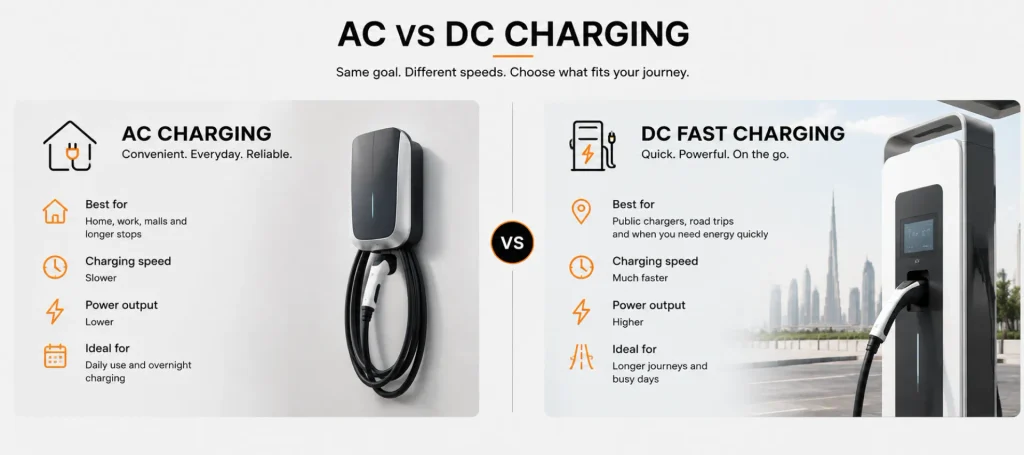
لا يحتاج معظم السائقين إلى اختيار نوع واحد فقط.
| نوع الشحن | الاستخدام الأنسب |
|---|---|
| الشحن المنزلي AC | الشحن اليومي والشحن طوال الليل |
| الشحن العام AC | عند التوقف لفترات أطول في العمل أو مراكز التسوق أو غيرها |
| الشحن السريع DC | الرحلات الطويلة أو عندما تحتاج إلى شحن السيارة بسرعة |
| موسع المدى | عندما تحتاج إلى مواصلة القيادة ولا يكون التوقف للشحن عملياً |
إذا كان لديك شاحن منزلي، فعادةً ما يكون الشحن AC الخيار الأسهل للاستخدام اليومي. تصل إلى المنزل، توصل السيارة بالشاحن، وتتركها تُشحن أثناء توقفها.
أما الشحن السريع DC فيصبح مفيداً عندما يكون الوقت مهماً.
فعلى سبيل المثال، إذا كنت تقود من دبي إلى إمارة أخرى وتحتاج إلى إضافة طاقة للبطارية أثناء الطريق، فمن المنطقي استخدام الشحن السريع بدلاً من الانتظار لساعات.
للمزيد من التفاصيل حول محطات الشحن وأنواعها، يمكنك قراءة دليلنا حول كيفية شحن سيارتك الكهربائية في دبي والإمارات.
ما سرعة شحن سيارات iCAUR REEV؟
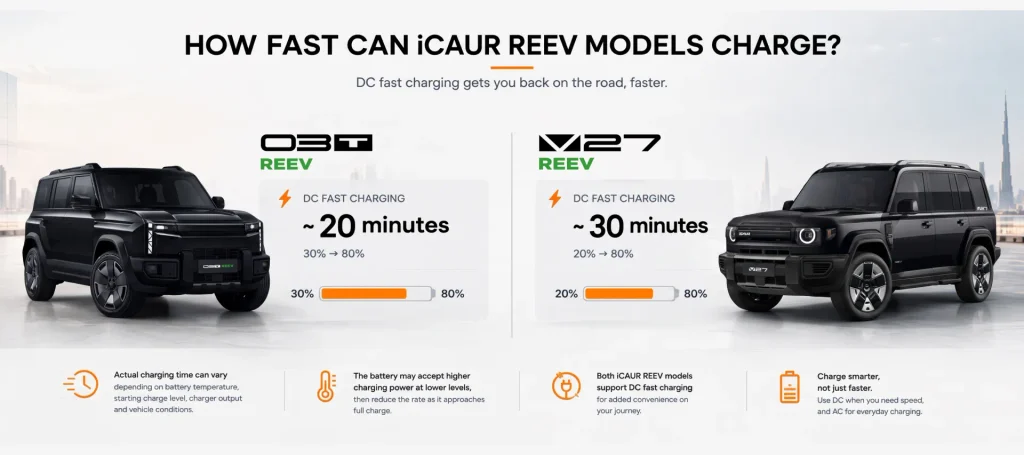
تدعم سيارات iCAUR REEV الحالية الشحن السريع DC.
يمكن لسيارة iCAUR 03T REEV شحن البطارية تقريباً من 30% إلى 80% خلال حوالي 20 دقيقة عند استخدام شاحن DC مناسب وفي ظروف الشحن الملائمة.
أما iCAUR V27 REEV فيمكنها شحن البطارية تقريباً من 20% إلى 80% خلال حوالي 30 دقيقة حسب الفئة وظروف الشحن.
وقد تختلف مدة الشحن الفعلية بناءً على عدة عوامل، منها درجة حرارة البطارية، ومستوى الشحن عند بدء العملية، وقدرة محطة الشحن، وطريقة إدارة السيارة للطاقة.
ومن الطبيعي أيضاً أن تلاحظ أن الجزء الأخير من عملية الشحن يستغرق وقتاً أطول. فعندما تقترب البطارية من الامتلاء، تقلل السيارة سرعة الشحن للمساعدة في إدارة البطارية بشكل مناسب.
هل تحتاج إلى شحن البطارية حتى 100% في كل مرة؟
لا.
إذا وصلت البطارية إلى 80% وكان ذلك كافياً لإكمال رحلتك والعودة إلى المنزل، فليس من الضروري دائماً الانتظار حتى تصل إلى 100%.
غالباً ما يصبح الشحن أبطأ كلما اقتربت البطارية من الامتلاء، لذلك قد تقضي وقتاً إضافياً في محطة الشحن مقابل كمية محدودة من الطاقة الإضافية.
لكن الوصول إلى نسبة شحن أعلى قد يكون مفيداً قبل رحلة طويلة إذا كنت تعرف أنك ستحتاج إلى أكبر قدر ممكن من مدى القيادة الكهربائي.
الفكرة ببساطة هي أن تشحن السيارة حسب احتياجاتك الفعلية، وليس لأن البطارية يجب أن تصل إلى 100% في كل مرة.
روتين شحن عملي للسائقين في دبي
لا تحتاج إلى التفكير بشكل مستمر في كيفية حماية البطارية أو إدارة كل عملية شحن بدقة.
يمكن أن يكون روتينك بسيطاً:
استخدم الشحن AC في المنزل أو العمل عندما يكون ذلك مناسباً.
استخدم الشحن السريع DC عندما تحتاج فعلاً إلى توفير الوقت.
تجنب ترك السيارة لفترات طويلة جداً وبطاريتها عند مستوى منخفض للغاية.
وخلال الرحلات الطويلة، اشحن بالقدر الذي تحتاج إليه للوصول إلى وجهتك براحة، بدلاً من انتظار وصول البطارية إلى 100% في كل محطة.
وهنا تظهر إحدى المزايا المهمة لسيارات iCAUR REEV: أنت لا تعتمد بالكامل على محطة الشحن التالية.
فعندما تنخفض الطاقة المتوفرة في البطارية خلال رحلة طويلة، يمكن لمحرك البنزين الخاص بتوسيع المدى توليد الكهرباء ودعم منظومة الدفع.
وهذا يمنح سائق REEV مرونة أكبر مقارنة بسيارة كهربائية تعتمد بالكامل على البطارية.
اقرأ أيضاً: لماذا يعمل محرك البنزين في سيارة REEV قبل نفاد شحن البطارية؟
هل يجب أن تقلق بشأن تدهور البطارية؟
من الطبيعي أن تفقد أي بطارية قابلة لإعادة الشحن جزءاً من قدرتها مع مرور السنوات.
لكن طريقة الشحن ليست العامل الوحيد الذي يؤثر على ذلك.
درجة حرارة البطارية، وعدد سنوات الاستخدام، وظروف القيادة، وطريقة إدارة الحرارة، وعدد دورات الشحن، والفترات التي تقضيها البطارية عند مستويات شحن مرتفعة أو منخفضة جداً، كلها عوامل يمكن أن تؤثر على حالة البطارية على المدى الطويل.
بالنسبة للسائق العادي، لا يوجد سبب لتجنب الشحن السريع DC عندما تحتاج إليه.
النهج الأكثر عملية هو ببساطة عدم الاعتماد على أسرع نوع من الشحن في كل مرة إذا كان الشحن الأبطأ متوفراً ومناسباً لجدولك.
الخلاصة
الشحن السريع DC هو أداة عملية، وليس شيئاً يجب أن يخشاه مالك سيارة REEV.
يمكنك الاعتماد على الشحن AC للاستخدام اليومي، واستخدام الشحن السريع DC عندما تحتاج إلى إضافة الطاقة خلال وقت قصير. وتتولى السيارة إدارة سرعة الشحن ودرجة حرارة البطارية تلقائياً في الخلفية.
بالنسبة للسائقين في دبي والإمارات، يتناسب هذا الأسلوب بشكل جيد مع سيارات REEV. يمكنك شحن البطارية بانتظام والاستفادة من القيادة الكهربائية اليومية، واستخدام الشحن السريع خلال الرحلات الأطول، مع وجود موسع المدى كخيار إضافي عندما لا يكون التوقف للشحن مناسباً.
وهذه المرونة هي واحدة من أهم مزايا امتلاك سيارة REEV في الإمارات.