شراء أول سيارة SUV في الإمارات تجربة ممتعة، لكن كثرة الخيارات قد تجعل القرار أكثر تعقيداً مما يبدو.
هل تختار سيارة SUV مدمجة أم كبيرة؟ هل الأفضل محرك بنزين، أو هايبرد، أو سيارة كهربائية، أو سيارة كهربائية ممتدة المدى REEV؟ هل تحتاج إلى دفع ثنائي أم دفع كلي؟ وهل يجب أن تركز على القسط الشهري، أم استهلاك الطاقة، أم التقنيات، أم قيمة إعادة البيع؟
الإجابة الصحيحة لا تعتمد فقط على شكل السيارة داخل صالة العرض، بل على الطريقة التي ستستخدمها بها كل يوم.
تتنوع ظروف القيادة في الإمارات بشكل كبير. فقد تستخدم السيارة للتنقل اليومي داخل دبي، ثم تقودها إلى أبوظبي في عطلة نهاية الأسبوع، أو تتجه بها إلى حتا، أو رأس الخيمة، أو الفجيرة، أو تستخدمها في رحلات عائلية أطول.
لذلك، يجب أن يبدأ اختيار أول سيارة SUV من أسلوب حياتك واحتياجاتك الفعلية، وليس فقط من التصميم أو قائمة المواصفات.
في هذا الدليل، نستعرض أهم الأمور التي يجب على المشتري لأول مرة في الإمارات معرفتها قبل شراء سيارة SUV جديدة.
1. حدد طريقة استخدامك للسيارة
قبل مقارنة المحركات، والشاشات، وقوة الأداء، والتجهيزات، فكر في أسبوعك المعتاد.
هل ستقود السيارة بشكل رئيسي داخل دبي؟
هل تتنقل باستمرار بين دبي وأبوظبي؟
هل ستستخدمها بمفردك أم مع العائلة؟
هل تحتاج إلى مساحة للأطفال أو الأمتعة أو المعدات الرياضية؟
هل تخطط للرحلات البرية أو الأنشطة الخارجية؟
الشخص الذي يقود يومياً على شارع الشيخ زايد قد تكون لديه أولويات مختلفة تماماً عن شخص يزور المناطق الجبلية أو الوجهات الطبيعية بشكل مستمر.
بالنسبة للقيادة داخل المدينة، قد تكون سهولة المناورة، والرؤية، وتقنيات الركن، والراحة، والكفاءة من أهم العوامل.
أما في الرحلات الطويلة، فقد تصبح راحة المقاعد، ومدى القيادة، ومساحة الأمتعة، وأنظمة مساعدة السائق، وهدوء المقصورة أكثر أهمية.
ابدأ بأسلوب حياتك، ثم قم ببناء قائمة السيارات المناسبة على هذا الأساس.
2. ضع ميزانية واقعية تشمل جميع التكاليف
من أكثر الأخطاء الشائعة بين المشترين لأول مرة التركيز فقط على سعر السيارة المعلن أو قيمة القسط الشهري.
التكلفة الحقيقية لامتلاك سيارة SUV تشمل عناصر أخرى يجب احتسابها، مثل:
- الدفعة الأولى
- أقساط التمويل الشهرية
- التأمين
- التسجيل
- تكلفة الوقود أو الكهرباء
- رسوم سالك ومواقف السيارات
- الصيانة الدورية
- الإطارات والقطع الاستهلاكية
- الإصلاحات المحتملة بعد انتهاء الضمان
قد تكون سيارة أعلى سعراً بقليل أكثر منطقية على المدى الطويل إذا كانت توفر ضماناً جيداً، واستهلاكاً أفضل، وتجهيزات قياسية أكثر، وخدمات ما بعد بيع موثوقة.
لا تقارن السيارات على أساس سعر الشراء فقط. حاول تقدير ما ستدفعه خلال عدة سنوات من الملكية.
ما قيمة الدفعة الأولى المطلوبة؟
عند شراء سيارة عن طريق التمويل البنكي في الإمارات، يجب الانتباه إلى شروط البنك المركزي الإماراتي المتعلقة بتمويل المركبات.
بصورة عامة، لا يتجاوز تمويل السيارة نسبة 80% من قيمة المركبة الممولة، ما يعني أن المشتري يحتاج عادة إلى تغطية النسبة المتبقية كدفعة أولى. كما يمكن أن تصل مدة السداد إلى 60 شهراً، بحسب شروط البنك وأهلية العميل.
قد تختلف نسبة التمويل، وسعر الفائدة، والدفعة المطلوبة، وشروط الموافقة من بنك إلى آخر.
قبل توقيع عقد التمويل، قارن إجمالي المبلغ الذي ستدفعه، وليس قيمة القسط الشهري فقط.
القسط الأقل على فترة أطول لا يعني دائماً أنك حصلت على الصفقة الأفضل.
3. اختر حجم سيارة SUV المناسب
تتوفر سيارات SUV اليوم بأحجام متعددة، والسيارة الأكبر ليست دائماً الخيار الأفضل.
سيارات SUV المدمجة
قد تكون سيارات SUV المدمجة مناسبة جداً للمشترين لأول مرة، خصوصاً لمن يقودون داخل المناطق الحضرية.
فهي أسهل في الركن والمناورة، وتمنح السائق وضعية جلوس مرتفعة ومساحة عملية دون أن تكون كبيرة بشكل يصعب التحكم به.
بالنسبة لمن يستخدمون مواقف مراكز التسوق، والمواقف السفلية، والشوارع المزدحمة، يمكن أن تجعل الأبعاد المدمجة تجربة الاستخدام اليومية أسهل كثيراً.
سيارات SUV متوسطة الحجم
توفر سيارات SUV متوسطة الحجم توازناً جيداً بين الرحابة وسهولة الاستخدام.
ويمكن أن تكون مناسبة للعائلات، أو لمن يقودون على الطرق السريعة بشكل متكرر، أو يحتاجون إلى حمل المزيد من الركاب والأمتعة.
سيارات SUV كبيرة الحجم
قد تكون السيارة الكبيرة مناسبة إذا كنت تحتاج فعلاً إلى عدد أكبر من المقاعد، أو مساحة أمتعة كبيرة، أو قدرات سحب، أو تجهيزات أقوى للطرق الوعرة.
لكن يجب على المشتري لأول مرة التفكير جيداً فيما إذا كان يحتاج فعلاً إلى هذا الحجم.
السيارة الأكبر قد تعني سعراً أعلى، واستهلاكاً أكبر، وصعوبة أكثر في الركن، وتكاليف تشغيل أعلى.
اختر أصغر سيارة SUV تستطيع تلبية احتياجاتك براحة، بدلاً من اختيار أكبر سيارة يمكنك تحمل تكلفتها.
4. تعرف إلى خيارات أنظمة الدفع
لم يعد سوق سيارات SUV في الإمارات يقتصر على محركات البنزين التقليدية.
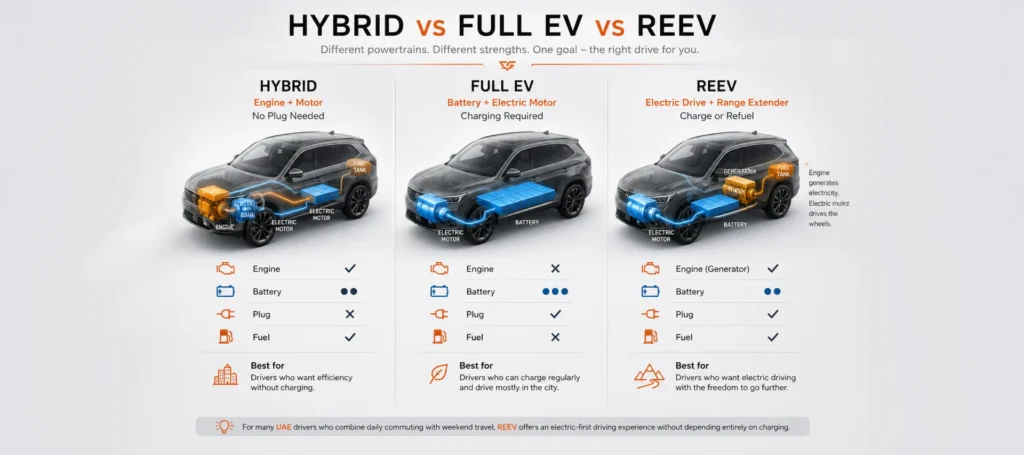
أصبح بإمكان المشترين الاختيار بين سيارات البنزين، والهايبرد، والهايبرد القابل للشحن، والسيارات الكهربائية بالكامل، والسيارات الكهربائية ممتدة المدى.
فهم الفرق بينها يساعدك على اتخاذ قرار أكثر وضوحاً.
سيارات SUV العاملة بالبنزين
تظل سيارات البنزين خياراً مألوفاً وسهل الاستخدام.
محطات الوقود متوفرة على نطاق واسع، ويمكن أن تكون مناسبة لمن يقودون لمسافات طويلة بشكل متكرر ولا يريدون الاعتماد على الشحن.
لكن من المهم مراجعة معدل استهلاك الوقود، خصوصاً إذا كان لديك مشوار يومي طويل.
سيارات الهايبرد
تجمع سيارات الهايبرد التقليدية بين محرك احتراق داخلي ونظام كهربائي يساعد على تقليل استهلاك الوقود.
يمكن أن تكون مناسبة للقيادة داخل المدينة وفي الازدحام، ولا تحتاج عادة إلى توصيلها بالشاحن يومياً.
سيارات الهايبرد القابلة للشحن
تحتوي سيارات الهايبرد القابلة للشحن على بطارية أكبر تسمح بقيادة السيارة بالطاقة الكهربائية لمسافة معينة قبل تدخل محرك البنزين بشكل أكبر.
وقد تكون مناسبة لمن يستطيعون شحن السيارة بانتظام، مع الاحتفاظ بمرونة المحرك في الرحلات الطويلة.
سيارات SUV الكهربائية بالكامل
تعمل السيارات الكهربائية بالكامل على البطارية دون محرك احتراق داخلي.
وهي توفر قيادة هادئة، واستجابة سريعة، وعدم وجود انبعاثات من العادم أثناء القيادة.
لكن على المشتري التفكير جيداً في إمكانية الوصول إلى الشحن.
فمالك الفيلا الذي يستطيع تركيب شاحن منزلي قد تكون تجربته مختلفة تماماً عن شخص يسكن في مبنى لا تتوفر فيه نقطة شحن مخصصة.
سيارات REEV الكهربائية ممتدة المدى
تمثل السيارات الكهربائية ممتدة المدى، والمعروفة باسم REEV، خياراً مختلفاً.
في هذا النوع من السيارات، تكون المحركات الكهربائية مسؤولة بشكل أساسي عن دفع المركبة، بينما يعمل محرك مخصص لتمديد المدى على توليد الكهرباء عند الحاجة.
قد يكون هذا النظام جذاباً لمن يريدون الاستمتاع بسلاسة واستجابة السيارة الكهربائية، مع مرونة إضافية عند القيام برحلات أطول.
وبالنسبة للسائقين في الإمارات الذين يجمعون بين التنقل داخل المدينة والقيادة على الطرق السريعة أو الرحلات في عطلة نهاية الأسبوع، يمكن أن تكون تقنية REEV خياراً عملياً ومثيراً للاهتمام.
5. لا تختَر السيارة بناءً على رقم المدى فقط
يحصل مدى القيادة على اهتمام كبير عند مقارنة السيارات الكهربائية والجديدة الطاقة، لكن الرقم المعلن لا يشرح التجربة كاملة.
يمكن أن يتغير الاستهلاك الفعلي للطاقة أو الوقود حسب عدة عوامل، منها:
- استخدام مكيف الهواء
- سرعة القيادة
- حالة الازدحام
- عدد الركاب ووزن الأمتعة
- أسلوب القيادة
- طبيعة الطريق
- درجة الحرارة الخارجية
تزداد أهمية هذه العوامل في الإمارات، حيث يعد المكيف جزءاً أساسياً من القيادة اليومية خلال معظم أشهر السنة.
بدلاً من السؤال فقط: ما أقصى مدى للسيارة؟
اسأل سؤالاً أكثر فائدة:
هل يناسب مدى هذه السيارة نمط قيادتي الأسبوعي؟
فكر في مسافة تنقلك اليومية، وأطول رحلة تقوم بها بشكل متكرر، وإمكانية الشحن أو تعبئة الوقود، وعدد الرحلات الطويلة التي تقوم بها شهرياً.
هذه المعلومات أكثر أهمية من الاعتماد على رقم واحد في الإعلان.
6. افحص أداء المكيف وراحة المقصورة
قد تبدو بعض التجهيزات بسيطة خلال زيارة قصيرة لصالة العرض، لكنها تصبح مهمة جداً عندما تقضي ساعة في زحام الصيف.
يجب أن يكون أداء نظام التكييف من أولوياتك عند شراء سيارة SUV في الإمارات.
خلال تجربة القيادة، تحقق من سرعة تبريد المقصورة.
وانتبه إلى توفر تجهيزات مثل:
- فتحات تكييف خلفية
- مقاعد مهواة
- إمكانية تشغيل المكيف عن بُعد، إذا كانت متاحة
- عزل حراري مناسب للنوافذ
- مواد مقاعد مناسبة للأجواء الحارة
- سقف بانورامي مزود بحماية جيدة من الشمس
لا تقتصر الراحة على المكيف فقط.
افحص دعم المقاعد، ووضعية الجلوس، ومساحة الصف الخلفي، وهدوء المقصورة، وراحة نظام التعليق، والرؤية، ومساحات التخزين، ومنافذ الشحن.
اجلس في جميع المقاعد، ولا تكتفِ بمقعد السائق.
قد تبدو السيارة واسعة في الصور، لكن التجربة قد تختلف عند جلوس أفراد العائلة ووضع الأمتعة داخلها.
7. ابحث عن التقنيات المفيدة وليس فقط الشاشات الكبيرة
تعتمد الكثير من سيارات SUV الحديثة على الشاشات الكبيرة وقوائم المواصفات الطويلة لجذب المشترين.
لكن يجب على المشتري لأول مرة التركيز على التقنيات التي سيستخدمها فعلاً.
قد تبدو الشاشة الكبيرة جذابة، لكن سهولة الاستخدام أثناء القيادة أهم من حجمها.
تحقق من سهولة الوصول إلى وظائف المكيف، والصوت، والملاحة، وإعدادات السيارة.
تشمل التقنيات العملية التي يمكن أن تكون مفيدة يومياً:
- ربط الهاتف الذكي
- نظام الملاحة
- الشحن اللاسلكي
- منافذ USB متعددة
- التحكم الصوتي
- شاشة رقمية للسائق
- الدخول والتشغيل دون مفتاح
- التحكم ببعض وظائف السيارة عن بُعد
وتعد تقنيات الركن مهمة بشكل خاص في الإمارات.
فالكاميرا الخلفية مفيدة، لكن حساسات الركن ونظام الرؤية المحيطية بزاوية 360 درجة يمكن أن يصنعا فرقاً كبيراً داخل المواقف الضيقة ومراكز التسوق.
8. اجعل السلامة وأنظمة مساعدة السائق أولوية
يجب ألا تكون السلامة مجرد تجهيز إضافي.
عند مقارنة السيارات، لا تنظر فقط إلى عدد الوسائد الهوائية.
توفر كثير من السيارات الحديثة أنظمة متقدمة تساعد السائق على مراقبة الطريق والتعامل مع المخاطر المحتملة.
قد تشمل هذه الأنظمة، بحسب الفئة والطراز:
- مراقبة النقطة العمياء
- مثبت السرعة المتكيف
- التحذير من مغادرة المسار
- المساعدة على البقاء في المسار
- التحذير من الاصطدام الأمامي
- الكبح التلقائي في حالات الطوارئ
- التحذير من حركة المرور الخلفية
- الكبح عند الرجوع للخلف
- كاميرا رؤية محيطية
هذه الأنظمة لا تعوض انتباه السائق، لكنها توفر مستوى إضافياً من الوعي والثقة أثناء القيادة.
بالنسبة لمن ينتقلون من سيارة صغيرة إلى سيارة SUV لأول مرة، قد تكون كاميرات الركن ومراقبة النقطة العمياء مفيدة جداً بسبب اختلاف حجم السيارة وزوايا الرؤية.
9. فكر فيما إذا كنت تحتاج فعلاً إلى الدفع الكلي
قد يبدو نظام الدفع الكلي AWD جذاباً، لكن ليس كل سائق بحاجة إليه.
بالنسبة لمن يقودون بشكل رئيسي على الطرق المعبدة داخل دبي أو أبوظبي أو الشارقة، قد تكون سيارة بالدفع الثنائي كافية تماماً.
يصبح الدفع الكلي أكثر أهمية إذا كنت تزور المناطق الوعرة، أو تقود في مسارات خارجية، أو تريد قدرة إضافية في بعض ظروف الطريق.
ومع ذلك، لا تفترض أن وجود نظام دفع كلي يجعل السيارة مناسبة تلقائياً للقيادة الصحراوية القوية.
تعتمد القدرة الحقيقية على الطرق الوعرة على عدة عناصر، منها:
- ارتفاع السيارة عن الأرض
- نوع الإطارات
- نظام التعليق
- زوايا الاقتراب والمغادرة
- أوضاع القيادة
- طريقة توزيع القوة
- حماية الجزء السفلي من السيارة
فكر بصدق في عدد المرات التي ستستخدم فيها هذه القدرات.
لا توجد فائدة من دفع مبلغ إضافي مقابل تجهيزات لن تستخدمها.
10. انتبه إلى ارتفاع السيارة عن الأرض
يعد الارتفاع عن الأرض من الأسباب التي تدفع كثيراً من المشترين لاختيار سيارة SUV.
فهو يساعد على التعامل مع المداخل المرتفعة، والمنحدرات، والطرق غير المستوية، وبعض المسارات الخارجية.
لكن الارتفاع الأكبر ليس دائماً أفضل.
قد تشعر السيارات المرتفعة جداً باختلاف أثناء المنعطفات، كما قد يكون الدخول والخروج منها أقل راحة لبعض الركاب.
السيارة المناسبة هي التي توفر ارتفاعاً كافياً لاحتياجاتك، مع الحفاظ على الراحة والثبات في القيادة اليومية.
11. قم بتجربة قيادة حقيقية
لا تشترِ سيارة SUV بناءً على الصور، أو المراجعات، أو جدول المواصفات، أو جولة قصيرة جداً حول صالة العرض.
تجربة القيادة من أهم خطوات شراء أول سيارة.
حاول تجربة السيارة في أكثر من حالة إن أمكن.
قد السيارة بسرعة منخفضة، واختبر التسارع، واستمع إلى صوت الطريق والرياح، وافحص الرؤية عند تغيير المسار.
جرب ركن السيارة واستخدام الكاميرات.
اجلس داخلها والمكيف يعمل.
لاحظ طريقة تعامل نظام التعليق مع المطبات والمنحدرات والأسطح غير المستوية.
إن أمكن، جرب السيارة على طريق أسرع أيضاً.
انتبه إلى وضعية القيادة.
هل تستطيع رؤية أطراف السيارة بسهولة؟
هل المرايا مناسبة؟
هل تصل إلى الأزرار المهمة دون عناء؟
هل المقود خفيف أكثر من اللازم أم ثقيل؟
قد تبدو السيارة مثالية عبر الإنترنت، لكنك قد تشعر خلال عشر دقائق بأنها لا تناسبك.
لهذا السبب تعد تجربة القيادة ضرورية.
12. راجع تفاصيل الضمان
يوفر الضمان الجيد راحة كبيرة، خصوصاً للمشتري لأول مرة.
لا تكتفِ بالسؤال عما إذا كانت السيارة تأتي مع ضمان.
اسأل بالتحديد عما يغطيه الضمان.
تحقق من:
- مدة ضمان السيارة
- الحد الأقصى للكيلومترات
- تغطية نظام الدفع
- ضمان البطارية في السيارات الكهربائية
- خدمة المساعدة على الطريق
- الحالات التي قد تؤثر في صلاحية الضمان
بالنسبة لسيارات الهايبرد، والهايبرد القابل للشحن، والسيارات الكهربائية، وREEV، من المهم فهم ضمان البطارية والمكونات الكهربائية.
أكد جميع التفاصيل مع الوكيل المعتمد، لأن الشروط قد تختلف حسب الطراز والسوق.
13. ابحث عن خدمات ما بعد البيع
لا يجب أن تنتهي علاقتك بالوكيل بمجرد استلام السيارة.
قبل الشراء، تعرف إلى مكان صيانة السيارة والخدمات المتوفرة.
اسأل عن:
- مواقع مراكز الخدمة المعتمدة
- فترات الصيانة
- باقات الصيانة
- توفر قطع الغيار الأصلية
- سهولة حجز المواعيد
- دعم الضمان
- المساعدة على الطريق
وجود شبكة موثوقة لخدمات ما بعد البيع يجعل تجربة الملكية أسهل بكثير.
وتزداد أهمية ذلك عند شراء سيارة من علامة جديدة أو اختيار تقنية حديثة مثل السيارات الكهربائية أو REEV.
السيارة المميزة تصبح أسهل في الاستخدام عندما تتوفر خلفها خدمات محلية موثوقة.
14. احصل على عرض تأمين قبل اتخاذ القرار النهائي
قد تختلف تكلفة التأمين بشكل واضح حسب نوع السيارة، وعمر السائق، وخبرته، وشركة التأمين، ونوع التغطية.
لا تنتظر حتى يوم استلام السيارة للتفكير في التأمين.
اطلب عروضاً تأمينية للسيارات الموجودة ضمن قائمتك النهائية قبل اتخاذ القرار.
يوجد نوعان رئيسيان من التأمين:
تأمين الطرف الثالث الذي يغطي المسؤولية عن الأضرار أو الإصابات التي تتسبب بها للآخرين، وفقاً لشروط الوثيقة.
التأمين الشامل الذي يقدم تغطية أوسع، وقد يشمل أضرار سيارتك أيضاً بحسب الشروط والاستثناءات.
اقرأ وثيقة التأمين بعناية.
انتبه إلى مبلغ التحمل، وشروط التصليح لدى الوكالة، والمساعدة على الطريق، ونطاق التغطية الجغرافي، والاستثناءات.
كما يعد وجود تأمين ساري المفعول جزءاً أساسياً من إجراءات تسجيل المركبة وتجديدها في الإمارات.
15. احسب تكاليف التسجيل والطرق
امتلاك سيارة في الإمارات يتضمن أيضاً تكاليف إدارية ويومية.
يجب تسجيل السيارة باسم المالك من خلال الجهة المرورية المختصة.
وبالنسبة لسائقي دبي، يجب احتساب رسوم سالك، ومواقف السيارات، والمصاريف اليومية الأخرى ضمن ميزانية الاستخدام.
يعمل نظام سالك بشكل إلكتروني، ويتم خصم رسوم العبور من الحساب المسجل عند مرور السيارة من بوابات التعرفة.
قد تبدو هذه التكاليف صغيرة مقارنة بسعر السيارة، لكنها تتراكم مع التنقل اليومي المستمر.
16. قارن فئات التجهيز بعناية
الفئة الأرخص ليست دائماً الأفضل من حيث القيمة.
وفي المقابل، لا يعني اختيار أعلى فئة أنها الأنسب لك.
قارن الفرق بين الفئات بالتفصيل.
في بعض السيارات، قد تمنحك الفئة الأعلى تجهيزات تستخدمها يومياً، مثل:
- أنظمة سلامة أكثر تطوراً
- كاميرا 360 درجة
- مقاعد مهواة
- نظام ترفيه أفضل
- مقاعد كهربائية
- أنظمة إضافية لمساعدة السائق
أما في سيارات أخرى، فقد تقتصر الاختلافات على عناصر تصميمية أو تجميلية لا تهمك كثيراً.
ضع قائمة بالتجهيزات الضرورية قبل زيارة صالة العرض.
سيساعدك ذلك على تحديد الفئة التي تقدم أفضل قيمة مقابل السعر.
17. فكر في التخصيص والاستخدام المرتبط بأسلوب حياتك
لم تعد سيارة SUV مجرد وسيلة تنقل.
بالنسبة لكثير من السائقين في الإمارات، أصبحت جزءاً من أسلوب الحياة.
قد ترغب في سيارة تناسب التخييم، أو ركوب الدراجات، أو التصوير، أو الأنشطة الخارجية، أو الرحلات العائلية، أو تعكس أسلوبك الشخصي.
هنا يمكن أن تصبح قابلية التخصيص عاملاً مهماً.
تحقق من توفر الإكسسوارات العملية، وحلول التخزين، والتعديلات الخارجية، وأنظمة حمل الأمتعة، والعناصر القابلة للتعديل.
تتبنى علامات مثل iCAUR نهجاً يركز على أسلوب الحياة، من خلال الجمع بين التصميم المختلف، وتقنيات الطاقة الجديدة، وإمكانات التخصيص، والطابع المناسب للمغامرات.
وبالنسبة للمشترين الذين يريدون سيارة SUV أولى لا تبدو تقليدية، فقد يكون هذا جانباً يستحق الاهتمام.
18. سيارة جديدة أم مستعملة؟
لا توجد إجابة واحدة تناسب الجميع.
قد تتيح لك السيارة المستعملة شراء فئة أعلى أو سيارة أكبر ضمن الميزانية نفسها.
لكن يجب التأكد بعناية من تاريخ المركبة، وحالتها، وعدد الكيلومترات، وسجل الصيانة، والحوادث السابقة، وحالة الضمان، والفحص الميكانيكي.
أما السيارة الجديدة فتمنحك نوعاً مختلفاً من راحة البال.
ستعرف تاريخ السيارة منذ اليوم الأول، وتحصل على ضمان المصنع المطبق، وتستفيد من أحدث تقنيات السلامة والراحة المتوفرة في الطراز.
بالنسبة للمشتري لأول مرة الذي يفضل تجربة ملكية واضحة ودعماً من الوكيل، قد يكون الشراء من وكيل معتمد خياراً أبسط.
19. لا تتسرع بسبب عرض ترويجي
يمكن أن تكون عروض السيارات جذابة.
قد تشمل التأمين المجاني، أو التسجيل، أو باقات الصيانة، أو استرداداً نقدياً، أو خيارات تمويل خاصة.
لكن لا يجب أن يكون العرض هو السبب الرئيسي في اختيار السيارة.
حدد أولاً ما إذا كانت السيارة تناسب احتياجاتك.
بعد ذلك، قيّم العرض.
الحصول على خصم على سيارة غير مناسبة لا يجعلها الخيار الصحيح.
اطلب توضيحاً كاملاً لجميع المزايا والشروط، وتحقق من تاريخ انتهاء العرض وأي متطلبات مرتبطة به.
20. أنشئ قائمة مختصرة من ثلاث سيارات
مقارنة عشر أو خمس عشرة سيارة في الوقت نفسه تجعل القرار أكثر صعوبة.
بدلاً من ذلك، قلص خياراتك إلى ثلاث سيارات جدية.
قارنها باستخدام المعايير نفسها:
| العنصر | السؤال الذي يجب طرحه |
|---|---|
| السعر | ما التكلفة الإجمالية للشراء؟ |
| التمويل | ما قيمة الدفعة الأولى والقسط الشهري؟ |
| نظام الدفع | بنزين، هايبرد، كهربائي، PHEV أم REEV؟ |
| الكفاءة | ما الاستهلاك المتوقع وفقاً لنمط قيادتي؟ |
| الراحة | هل السيارة مريحة داخل المدينة وعلى الطرق الطويلة؟ |
| المساحة | هل توجد مساحة كافية للركاب والأمتعة؟ |
| السلامة | ما أنظمة مساعدة السائق المتوفرة؟ |
| التقنيات | هل التجهيزات مفيدة فعلاً؟ |
| الضمان | ماذا يغطي الضمان وكم مدته؟ |
| الصيانة | هل تتوفر خدمات ما بعد البيع بسهولة؟ |
| التأمين | ما تكلفة التأمين الشامل؟ |
| تجربة القيادة | أي سيارة كانت الأفضل أثناء القيادة؟ |
عندما تقارن السيارات بهذه الطريقة، يصبح القرار أكثر وضوحاً.
هل تعد سيارة REEV خياراً جيداً للمشتري لأول مرة في الإمارات؟
قد تكون خياراً جيداً للسائق المناسب.
يمكن أن تناسب سيارة REEV الشخص الذي يريد تجربة قيادة كهربائية، لكنه غير مستعد للاعتماد الكامل على الشحن في جميع الرحلات.
وهذا أمر مهم في الإمارات، حيث يجمع كثير من السائقين بين الرحلات القصيرة داخل المدينة والمسافات الطويلة على الطرق السريعة.
قد يتضمن أسبوعك المعتاد التنقل داخل دبي، بينما تشمل عطلة نهاية الأسبوع زيارة أبوظبي، أو الفجيرة، أو رأس الخيمة، أو حتا.
يهدف نظام REEV إلى توفير مرونة إضافية لهذا النوع من الاستخدام.
ومع ذلك، يجب على المشتري فهم طريقة عمل السيارة، وإمكانات الشحن، ومدى القيادة الرسمي، والضمان، ومدى توافقها مع نمط استخدامه اليومي.
ما الأولويات الأساسية للمشتري لأول مرة؟
من السهل الانشغال بأرقام القوة، والشاشات الكبيرة، والتصميم الجريء، وقوائم التجهيزات الطويلة.
لكن أفضل سيارة SUV أولى هي السيارة التي تجعل حياتك اليومية أسهل.
امنح الأولوية لما يلي:
الراحة في رحلاتك اليومية.
ميزانية ملكية واقعية.
أنظمة سلامة تستخدمها فعلاً.
مساحة مناسبة للركاب والأمتعة.
نظام دفع يناسب طريقة قيادتك.
ضمان قوي وخدمات ما بعد بيع موثوقة.
سيارة تستمتع بقيادتها.
أما التجهيزات الأخرى، فتأتي بعد ذلك.
الخلاصة: كيف تختار أول سيارة SUV في الإمارات؟
يجب أن يكون شراء أول سيارة SUV تجربة ممتعة، وليس قراراً مربكاً.
ابدأ بفهم أسلوب حياتك.
حدد ميزانية تشمل جميع تكاليف الملكية.
قارن بين خيارات أنظمة الدفع.
فكر في ظروف القيادة في الإمارات.
راجع التأمين، والضمان، والصيانة، وخدمات ما بعد البيع.
والأهم من ذلك، قم بتجربة قيادة السيارات التي تفكر في شرائها.
يمنح سوق السيارات في الإمارات المشترين اليوم خيارات أكثر من أي وقت مضى، بدءاً من سيارات البنزين والهايبرد، وصولاً إلى السيارات الكهربائية بالكامل وتقنيات REEV الحديثة.
وبالنسبة للسائقين الذين يبحثون عن تجربة أكثر عصرية، تقدم iCAUR جيلاً جديداً من سيارات SUV الموجهة للمغامرات، والتي تجمع بين التصميم المميز، وقابلية التخصيص، والتقنيات الذكية، ونظام القيادة الكهربائي ممتد المدى.
اكتشف مجموعة سيارات iCAUR في دبي، وقارن بين الطرازات المتوفرة، واحجز تجربة قيادة لمعرفة السيارة التي تناسب أسلوب حياتك قبل اتخاذ القرار النهائي.